Fun fact
Some fluorite crystals glow like magic under ultraviolet light! This amazing glowing trick is called 'fluorescence'. In fact, the word fluorescence was named after fluorite because it was the very first mineral discovered to do this. It's like nature's own neon sign!
Did you know?
Did you know that fluorite helps keep your teeth strong? It contains fluorine, which is used to make fluoride. That is the exact same ingredient added to your toothpaste and tap water to fight off nasty cavities and keep your smile super healthy every single day!
Etymology
Fluorite gets its name from the Latin word 'fluere', which means 'to flow', because it melts easily. This clever mineral inspired the name of the chemical element fluorine, and it also gave us the word 'fluorescence' because of the beautiful way it glows under special light.
Composition
Fluorite is a simple mineral made of just two chemical elements: calcium and fluorine. Scientists call it calcium fluoride. It forms when hot, mineral-rich water underground cools down, allowing these two elements to lock together into beautiful, solid crystals.
Properties
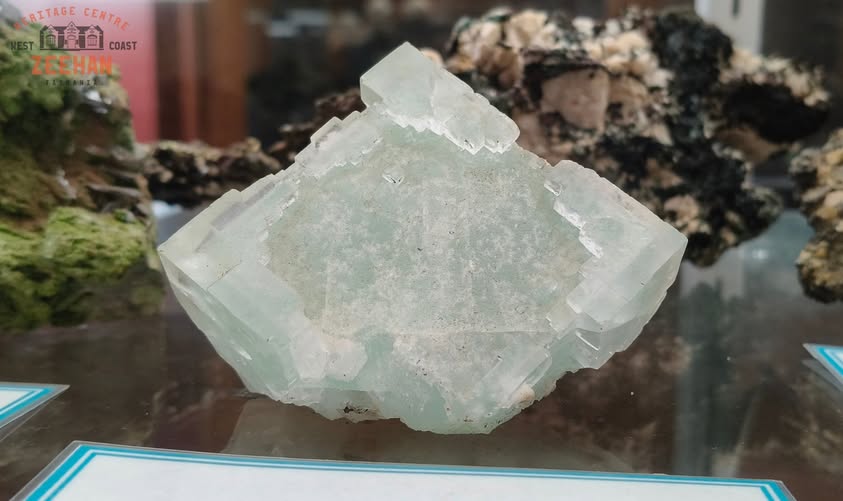
Fluorite is famous for its rainbow of colours, from deep purple to bright green. It is quite soft—you can easily scratch it with a steel pocketknife, unlike a hard diamond. Its coolest property is splitting perfectly into neat, smooth pyramid shapes when tapped gently.
Formation
Fluorite forms deep underground inside rocks. Super-hot water filled with melted chemicals flows through cracks in the earth. As this liquid slowly cools down, the calcium and fluorine trap together, growing into neat, shiny cube-shaped crystals over thousands of years.
Provenance
Found worldwide, fluorite has a special home on Tasmania's wild west coast! It is found in historic mining towns like Zeehan and Rosebery, and inside the famous Kara Mine. These Tasmanian places are celebrated by rock collectors for producing beautiful, colourful mineral specimens.
Uses
Long ago, ancient Romans carved fluorite into beautiful drinking cups. Today, it is melted down to help make strong steel and aluminium. It is also used to make high-tech camera lenses, shiny jewellery, and the fluoride that protects your teeth from decay!
Abundance
Fluorite is a very common mineral found all over the globe, so it isn't rare. However, finding large, perfectly clear crystals or unique colourful pieces—like the beautiful specimens hidden in the old mines of Western Tasmania—is a much more exciting and uncommon treasure!
Value
Common industrial fluorite is inexpensive because there is so much of it. However, bright, perfectly shaped crystals are highly valued by collectors. Special specimens from historic locations, including Tasmania's west coast, can be worth hundreds of dollars to museums and rock lovers!
People
In 1852, a famous scientist named George Gabriel Stokes discovered fluorite's magical glowing ability and named it 'fluorescence'. Today, Tasmanian geologists and local West Coast miners are famous for uncovering beautiful hidden pockets of this colorful crystal deep underground.
Further reading
Discover more about fluorite online! Check out the 'Geoscience Australia' website (ga.gov.au) for Australian mineral facts, visit 'Mindat.org' to see amazing photos of Tasmanian fluorite specimens, or look up the 'Tasmanian Museum and Art Gallery' to explore local geological history.
Food for thought
If a simple mineral like fluorite can look like a normal rock in daylight but glow with bright, beautiful colours under ultraviolet light, what other hidden secrets do you think are waiting to be discovered in the rocks right under our feet?